Red pandas are among the world’s most adorable yet endangered animals, with fewer than 10,000 remaining in the wild. Protecting them requires a better understanding of their health, especially the gut, which plays a vital role in digestion and immunity. A new study has developed miniature 3-D cellular structures that mimic red panda intestines in the laboratory, providing a safe and innovative way to study gut health, disease, and potential probiotic therapies.
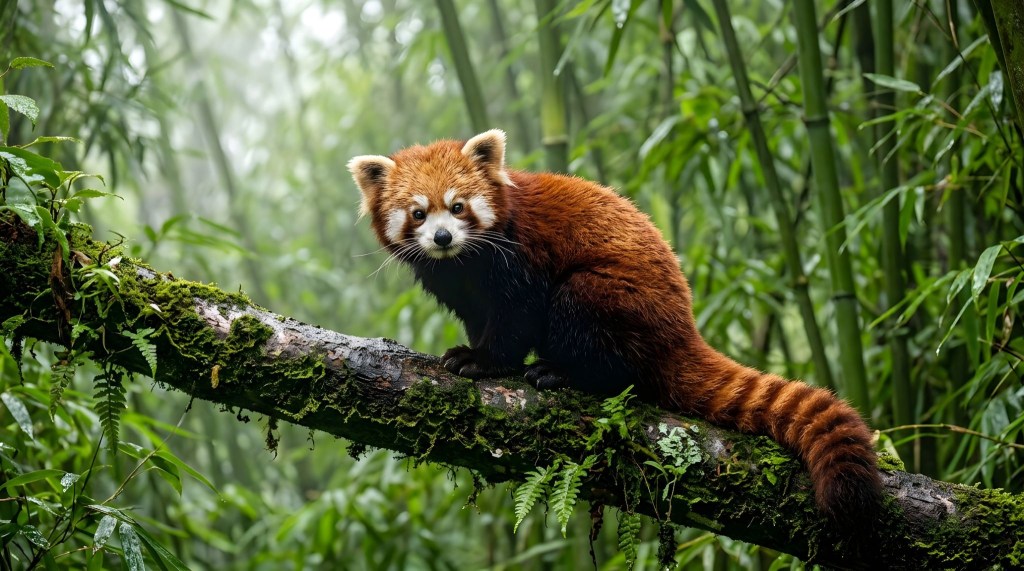
Image Source: Red Panda Bamboo Forest Natural – Free photo on Pixabay
One of the most enchanting creatures – cherubic and cinnamon-colored, cat-sized with a black belly and a bushy-ringed tail – red pandas are cute, shy, tree-dwelling mammals in the broadleaf & sub-alpine forests of the Eastern Himalayan ranges of Nepal, India, Bhutan, China and Myanmar.
Red pandas (Ailurus fulgens) mostly survive on a staple diet of bamboo, just like the giant pandas (Ailuropoda melanoleuca), though the two species are not closely related either evolutionarily or genetically. Protecting these elusive and charming critters requires more than preserving forests. Their highly specialized diet necessitates studying their gut microbiology to gain useful insights regarding their digestion and overall health. Such information could provide valuable clues for maintaining healthy panda populations.
Red pandas may appear small but surprisingly have a huge appetite, munching about 2-4 pounds of fast-growing bamboo leaves and tender stems per day. Bamboo, though abundant, is low in nutrients and packed with tough fiber that is difficult to digest, compelling red pandas to eat large quantities for long stretches of time to meet their energy needs.
How they do so despite possessing a short and simple digestive tract is a curious case.
The answer lies with the gut microbes that play an organic role in breaking down bamboo, extracting nutrients, strengthening the immune system, and maintaining a healthy intestinal lining (epithelium).
The intestine is extraordinary in that its epithelium is among the fastest renewing tissues in the body. This constant renewal is driven by intestinal stem cells (ISCs), which reside in tiny pockets called crypts and continuously generate new intestinal cells. Gut microbes help regulate this process by influencing stem cell activity, fortifying the intestinal barrier, preventing harmful pathogens, and shaping immune responses.
ORGANOIDS – an ethical lab model
Since experimenting with living endangered animals is limited by concerns regarding conservation, researchers Guo Q. et al. established an ethically compliant platform for studying red panda intestinal biology. They developed an alternative laboratory model called intestinal organoids, which are tiny 3-dimensional structures grown from ISCs that closely resemble the real organ.
The team collected healthy intestinal tissues from red pandas that had died naturally, isolated the stem cells, and grew them into organoids that mimicked the intestinal morphology with villus-like structures and budding crypt-like domains. These could be maintained for months, multiplied in fresh cultures, frozen for long-term storage, and revived whenever needed. (However, the organoids lacked other essential components of the intestine, like immune cells, blood vessels, and nerves.)
Can these organoids be considered as representative of a real red panda intestine?
To confirm this, the researchers used advanced gene expression techniques to demonstrate that the organoids actively developed the major types of intestinal epithelial cells associated with digestion and regulation just as found in the animal crypts. They identified cells expressing markers of nutrient absorbing cells (DUT), mucus-producing goblet cells (TFF3 and LGALS4), antimicrobial Paneth cells (PABPC1), hormone-producing enteroendocrine cells (ChgA), and stem cells (TFF1 and WNT6). This proved that organoids were ideal for studying intestinal ‘host–microbe’ interactions.
Next, do these organoids respond to probiotics?
Probiotics are microorganisms that help their host organisms maintain a balanced gut microbiome. The researchers aimed at testing whether a beneficial bacteria, Lactobacillus salivarius, could serve as a probiotic for red pandas. As lactic acid bacteria are mostly present in the small intestine, researchers grew the bacteria together with organoids derived from ileum (longest section of the small intestine) and monitored the response.
They found that exposure to L. salivarius increased the production of MUC2, a gene responsible for making mucin, which is the main component of the protective mucus layer lining the intestine. The mucus barrier is important to prevent harmful bacteria from reaching the intestinal cells. The probiotic also increased the activity of certain stem cell-related genes associated with maintaining and repairing intestinal tissue, suggesting that it may help to preserve the integrity of the intestinal lining. Genes that play a role in protecting the mucosal barrier (like OLFM4 and FCGBP) were upregulated, whereas those associated with inflammation (like EDNRB and LBH) were downregulated.
Is the probiotic useful in defending the intestine against disease-causing bacteria?
For this, the team treated the organoids with L. salivarius before exposing them to Klebsiella pneumoniae, a harmful bacteria. They observed lower levels of infection and inflammation than in untreated organoids. This meant that the probiotic helped intestinal cells prevent damage caused by the pathogen.
DISCUSSION
This is the first study to successfully establish and characterize an organoid model for an endangered species like the red panda. It emphasizes the applicability of organoid technology alongside gene profiling for wildlife conservation. This is a feasible approach for scientists to understand how beneficial and harmful microbes interact, and then guide in improving health management strategies in zoos and conservation programs.
To sum up, the experimental results suggest that L. salivarius may have potential to work as a probiotic supplement to improve gut health and reduce the risk of diseases in red pandas, although further testing in living animals would be needed before it could be advocated in practice.
In all, future research should aim at developing more sophisticated models that completely replicate the intestine, including all the functional components that collectively impact how the gut functions in a living animal. Also, here the results obtained were based on a co-culture system that allowed only limited contact between the bacteria and the inner surface of the organoids. Due to this, it only partially recapitulated the complexity of an intestine.
BIODIVERSITY viewpoint
For the red panda, this research also carries a significance from the biodiversity point of view. Bamboo makes up about 95% of their diet, and by feeding on bamboo, red pandas help regulate forest growth, preventing bamboo from becoming overly dominant. This in turn allows a rich variety of plants and animals to simultaneously flourish. Therefore, conservation measures of these prized pandas have a domino-effect on the preservation of an entire ecosystem.
One red panda is worth a forest of stories!
Edited by Ethan Honeycutt and Amanda N. Weiss

 GeneBites
Leave a comment