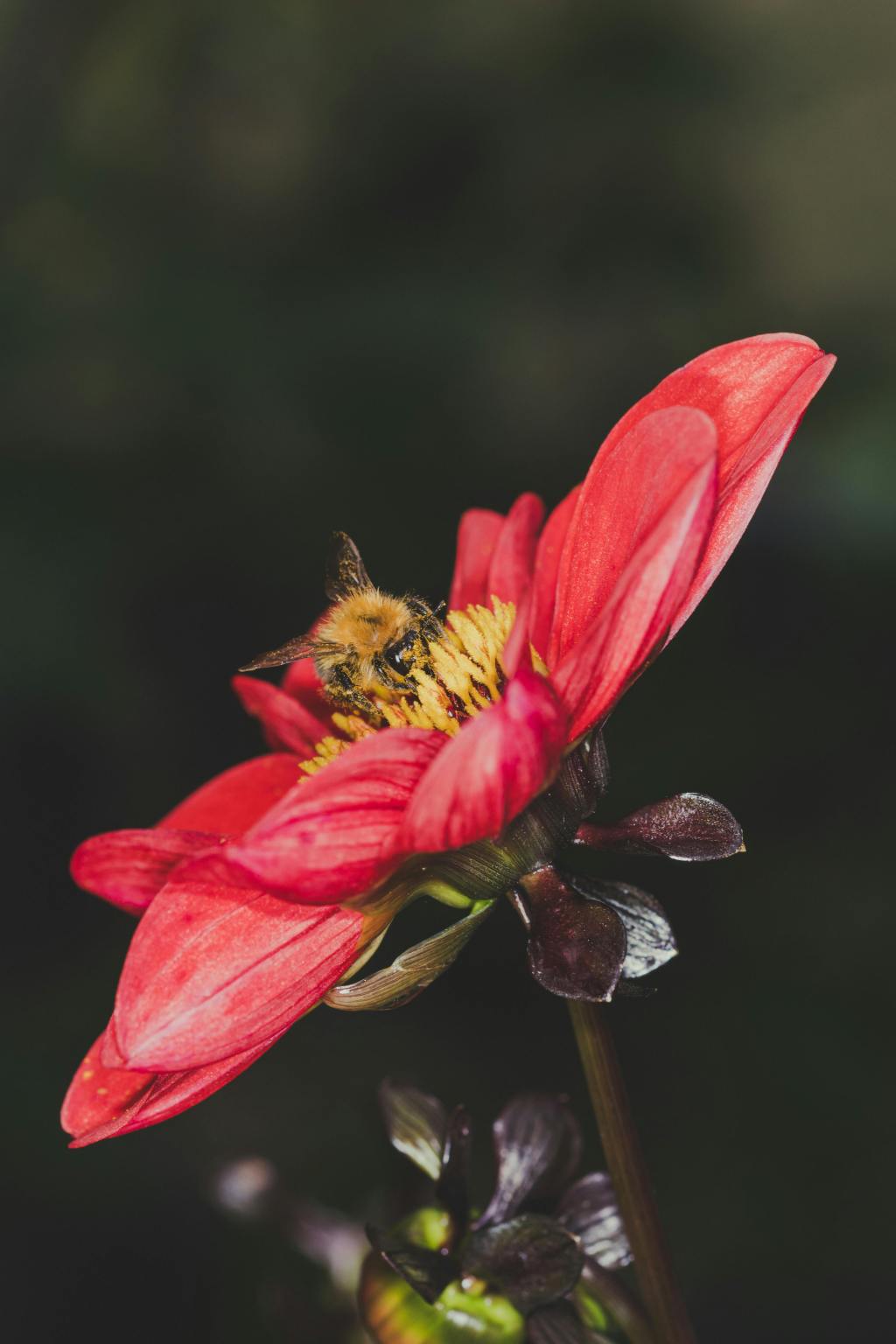
Nectar, produced by specialized glands called nectaries in flowers, is instrumental in attracting pollinators and enabling plant reproduction. Its composition and production are determined by a complex interplay of genes and hormones. On the other hand pollinator behavior has majorly influenced the structure and location of nectaries based on ecological and evolutionary pressures.
Image Source: https://www.pexels.com/photo/photo-of-bumblebee-on-flower-3123901/
How do we get from nectar to plant reproduction?
Reproduction in angiosperms (flowering plants), is far more than a mere biological event. It is an elegant choreography of interactions between flora and fauna, at the center stage of which is nectar, a sugary liquid that flowers produce to set forth ‘pollination’.
During pollination, pollen grains are transferred from one flower to another, with the help of pollinators like bees, butterflies and birds, which get attracted to the scent and sweetness of nectar.
Pollen is a powdery substance which contains the male part of the flower. When an insect/bird rests on a flower to consume nectar, pollen from the anthers gets stuck onto its body. When the same insect visits another flower, some of these pollen grains get rubbed off onto the stigma, or the female part, of the second flower. This exercise is essential for the plant to produce seeds, fruits and maintain genetic diversity among plants.
So how did all sorts of flora across the Earth evolve different kinds of nectar to attract a diverse set of pollinators for millions of years? In a recent review by Liao and colleagues, researchers lay out the unique biology underlying floral nectary diversity and how this evolution led to the very specific pollinator-flower interactions we observe in nature.
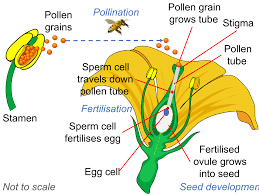
Image Source: Wikimedia Commons
Nectar is known to be abundantly composed of sugars and water. It is supplied by the bulk of vascular tissues called ‘phloem’ in plants. However, it is surprisingly also a mixture of other compounds in lesser amounts like amino acids, proteins and even antimicrobial agents like hydrogen peroxide. In this way, nectar isn’t just a reward for pollinators, but also acts as a filter in deciding which organisms get to interact with the plant.
The nectar is released through tiny structures called ‘nectaries’ that can appear in different parts of the flower, often matching the feeding habits of their preferred visitors. For example, hummingbirds have long and slender beaks that can extract nectar from deep within tubular flowers. When it pushes its head into the flower, the pollen gets deposited on its head and neck. In the case of bees, however, broad-petalled flowers provide a perfect landing platform, from where they can move towards the base of the flower. This in turn causes pollen dust to fall onto the bees’ hairy bodies.
The style of secretion through nectary tissues also vary: some secrete nectar through pores called stomata, while some use hair-like projections called trichomes, or others even break through ruptures on the surface. Despite these variations, all nectaries are defined by the same tasks of producing nectar and then releasing it. Normally, secretion coincides with ‘anthesis’, the stage when flowers bloom and become reproductively active.
Scientists have explored how nectar is made, putting forward two main ideas: one theory (‘leaky phloem hypothesis’) proposes that it leaks out naturally from the phloem through weaknesses in the cell walls, while the other (‘sugar secretion hypothesis’) suggests that nectar is actively built up in the nectaries and secreted.
After extensively studying different types of flowering plants like Arabidopsis thaliana and Petunia hybrida, a handful of pivotal genes like CRABS CLAW (CRC) and BOP1/2 have been identified which control where and how nectaries develop. Plant hormones like auxin and jasmonate, have also been found to help regulate this process. Other equally important genes are SUCROSE PHOSPHATE SYNTHASE (SPS) that synthesizes sugar (sucrose), SWEET9 that facilitates transport of these sugars, and CELL WALL INVERTASES 2/4 (CWIN 2/4) that further break them down into simpler sugars (glucose & fructose).
Interestingly, nectaries are believed to have evolved independently multiple times across different plant groups; however similarities in metabolic pathways and functions imply that particular genes have been conserved/sustained even among distantly related species.
Now what exactly drives all this evolution? Pollinators! Flowers adapt their nectaries based on the needs of the animals that visit them. Bigger pollinators like hummingbirds tend to favor flowers that give lots of nectar. Such flowers have bigger nectaries whose size is determined by genes like BEN and ROB. Meanwhile, plants that rely on wind or attract smaller insects or self-pollinate may reduce, shift, or lose their nectaries altogether since they don’t need to attract visitors.
Though we’ve come a long way in understanding nectaries, many mysteries remain. A number of questions linger in the mind that are not addressed in the review, but require further pondering and investigations. For example, how are floral nectaries (flowers) differ from non-floral ones (leaves)? Can nectar-producing traits move from one part of the plant to another? How do nectaries know when to replenish – or when to reabsorb? And how does nectar composition vary among the species?
These answers could have practical and real benefits. In agriculture, for instance, farmers could breed crops with nectar attributes that are likely to bring in more pollinators, thereby boosting harvests. It also helps in better pest management by using those nectar-producing plants that can keep out unwanted insects, reducing the dependence on chemical pesticides.
The evolution of nectaries is a story of cooperation between plants and pollinators, and between genes and environment. It reminds us that the nectar of life is sweet only when shared with others.
Edited by Amanda N. Weiss & Jayati Sharma



Leave a Reply