Written by Priyati Sharma

Click.
With the empty tube securely loaded into the machine, you sit back in your chair. You drum your fingers on your desk as your mind wanders off to how many dirty dishes have piled up in your sink, how the leaves in the yard need to get raked sometime soon, and…
Buzz.
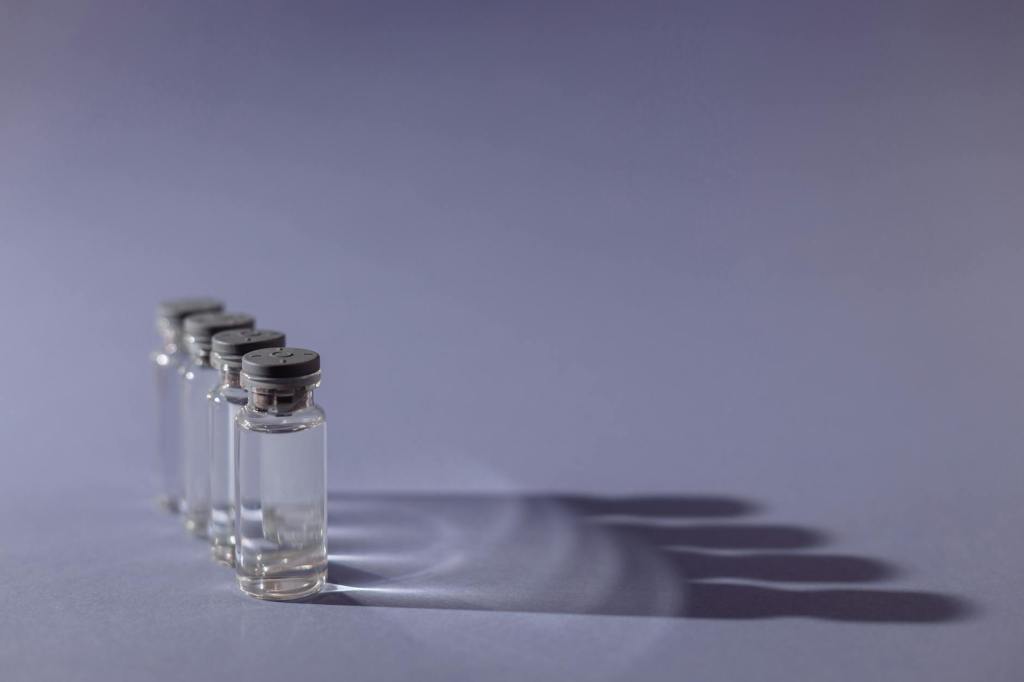
Your DNA’s been printed. You push a button on the side of the tabletop machine and out pops your clear, plastic tube, now with a few droplets of an unassuming clear liquid inside. You hold the tube up to the light of the morning sun. What a clinical-looking thing. Twenty years ago, you wouldn’t have imagined yourself collecting these tubes, but times have changed. Important financial documents and family photo archives aren’t on a hard drive or cloud server, but stored in tiny vials of synthetic DNA that now go in a specialized freezer, much like the safe your parents used to stuff the same documents in years ago.
Welcome to the potential future of data storage, where DNA — the molecule that has faithfully carried the genetic blueprint of life for billions of years — is also the commonplace medium for preserving our digital world long-term. Unlike bulky hard drives or giant server farms that take up valuable arable land, DNA storage would condense massive amounts of information into what are essentially microscopic strands of chemicals. A single gram of DNA, equivalent to ¼ teaspoon of sugar, can theoretically store 215 petabytes of data. Existing data storage options don’t even come close to that level of efficiency.
How would it all work? The process begins with encoding digital information into the four bases of DNA: adenine (A), thymine (T), guanine (G), and cytosine (C). At their core, computers store all information in binary, or a combination of 0s and 1s. Transforming binary code to sequences of A, T, G, and C would take place with the help of software that can translate seamlessly between both languages. Once the data is encoded, it can be read back at any time using nanopore sequencing, a process where a DNA strand passes through a tiny pore, and the sequence of bases are detected and recorded as they travel through. Once this technology becomes faster, cheaper, and more accurate, it will be key to making DNA data storage more accessible.
Later that day, you finalize a major work presentation filled with years of data-heavy market analysis. Instead of uploading a copy of it to a cloud server, you upload the file to the software on your laptop which encodes your spreadsheets and PDFs into synthetic DNA, sending it off to the DNA printer, which responds with another click and buzz. You’ll store the resulting tube alongside your personal archive – inside a freezer room on the sixth floor guaranteed to protect data against harmful UV rays, temperature fluctuations, and any other environmental factors that could degrade the DNA.
When stored at ideal conditions like these, synthetic DNA can retain data for centuries without degradation, surpassing the lifespan of today’s hard drives and flash storage by miles. Though the company likes to take these precautions, the beauty of this system is that it’s compact and immensely stable, even when conditions aren’t this curated. After all, DNA has preserved the genetic information of woolly mammoths and Neanderthals for millions of years, long enough for us to have been able to analyze in the modern day.
Despite its potential, DNA data storage technology is still evolving. Mutations in the form of small errors that occur when encoding or decoding the DNA can distort stored data, and the speed of those processes are currently too slow and resource-intensive to justify everyday use. In the same way that genetic mutations in living organisms can lead to diseases, these errors could corrupt digital files. However, early computing faced speed and cost barriers as well, and scientists are already developing error-correcting methods and safeguards to ensure DNA storage remains accurate and reliable. The result is a medium that mimics the precision, durability, and versatility of nature’s blueprint.
Years in the future, you’re compiling a collection of photos to share at a family reunion. At one time you would have had to pore over fragile photo albums and towers of old picture frames, but you instead turn to a box in your DNA freezer that’s been meticulously labeled with important dates and special occasions throughout your life. The tubes inside store pristine backups of all of the precious photos you need for this project, and you quickly begin running a few drops from each of the tubes through the decoder. In minutes, you’re reliving those moments through your computer screen, grateful that those memories will stay safe in that tube, right where you left them all those years ago.
Edited by Jameson Blount and JP Flores



 GeneBites
Leave a reply to Masakazu Iwai Cancel reply