In recent work published in Nature Genetics, scientists conducted the first genome-wide association studies (a method for finding genetic variants associated with a trait or disease) for age-related macular degeneration (a cause of age-related vision loss) in people of African and Hispanic ancestries, providing insights into differences in disease prevalence between populations.
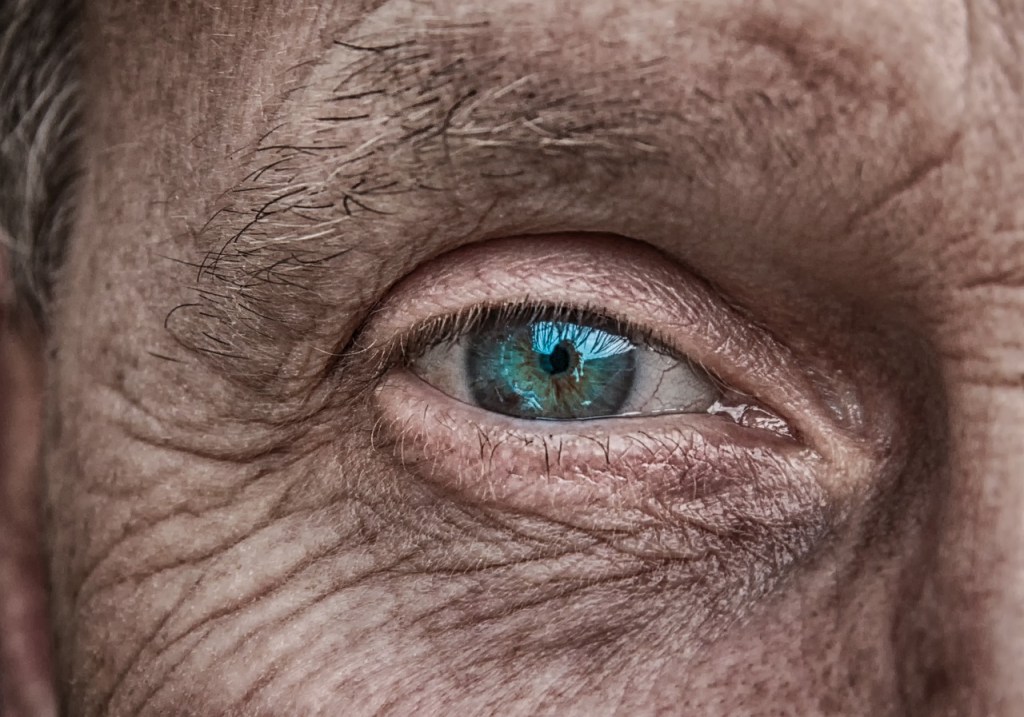
You know how when people age, their vision sometimes worsens? One cause of sight problems is age-related macular degeneration (AMD), where the part of the eye that helps you see straight ahead (the macula) becomes damaged. This can occur from the macula gradually thinning (dry AMD) and/or abnormal blood vessel growth in the eye causing damage (wet AMD). People with AMD may have blurry central vision and straight lines may look wavy to them; but interestingly, AMD doesn’t affect peripheral vision.
Rates of early and late stages of AMD have been found to differ across populations, both by geographic region and by ethnicity. Likewise, certain genetic variants have been associated with AMD in some ethnicities, but not others. Notably, a study from 2014 found that some major genetic variants previously known to be associated with AMD in European populations were not associated with the disease in non-European populations.
One way that scientists try to find genetic factors that contribute to a wide range of phenotypes or disorders is through genome-wide association studies (GWAS), where many individual spots of sequence variation across the genome are examined in a large set of people, both those with and without a health condition or trait, to identify variants that correlate with said condition or trait. Since many traits, which we can refer to as phenotypes, result from a combination of many small contributing factors, a GWAS has the potential to find some of these genetic factors.
However, it’s important to remember that since a GWAS tests correlation, the identified variants aren’t necessarily the contributing cause of the phenotype; in some cases, they are inherited more often with an actual causative variant. Because of this, follow-up analyses and experiments are needed to find the causal variants associated with a given phenotype.
Additionally, since most genetic information used in GWASs comes from people with European ancestry, GWAS findings may not be accurately transferable for non-European populations, who may have different rare genetic variants and exhibit different patterns of linkage disequilibrium, or how specific DNA variants are inherited together due to location in the genome.
In a new study by Gorman et al., researchers used data from the U.S. Department of Veterans Affairs Million Veteran Program (MVP) to find genetic variants associated with AMD in multiple ancestry populations. With this data, as well as other datasets, they found 60 variants associated with AMD in European ancestry populations, 27 of which had not been previously identified.
The scientists also used the MVP data to conduct the first AMD GWASs in people of African ancestry and Hispanic ancestry. There were much fewer individuals in these datasets compared to the European ancestry dataset, which makes it more difficult to find variants that have an effect. Nevertheless, they did find one variant in the African cohort and two in the Hispanic cohort that were associated with AMD. The variant found in the African cohort was also present in the European cohort, but was not as strongly associated with AMD.
The researchers then used data from the three ancestry groups (including the meta-analysis of European data from other datasets) in order to look at effects across multiple ancestries and to increase the ability to find relevant AMD-associated variants. In this analysis, 62 total variants were statistically significant, meaning that their association was unlikely to have occurred by random chance. This included three variants that weren’t significant when looking only in the European ancestry data. The researchers then did further analyses to try to find causal variants that impact the expression of AMD-associated genes, and found six candidates. Thus, including genomic data from non-European populations allowed scientists to find new variants associated with AMD that were missed when only using data from European ancestry.
In addition to looking at genetic variants, the scientists looked at gene expression data from multiple public datasets, covering many types of body tissues. They found that the use of genes associated with AMD tended to be correlated between most tissues. They also did an analysis (called gene set enrichment analysis) to determine what biological functions the genes whose expressions are associated with AMD tended to be involved in. This analysis revealed that among the functions of all genes with AMD-associated expression, common functions included several aspects of immunity and inflammation, regulation of high-density lipoprotein cholesterol (the “good” cholesterol), and programmed cell death activated by conditions outside the cell. This suggests that these functions might play an important role in AMD development, and future studies could further explore causal links between specific genetic variants, their impacts on these functional pathways, and AMD progression.
While this study does important work to increase the number of known AMD-associated genetic variants as well as increase the diversity of ancestries represented in AMD GWASs, it is only the beginning. Follow up studies directly testing causal relationships between variants and disease symptoms may be critical for translating these findings into clinical use. Furthermore, as the researchers discuss, this GWAS looked broadly at AMD diagnosis rather than stratifying by severity and specific symptoms, so it did not provide information on whether certain variants are associated with specific manifestations of AMD. They also mention that there remains a lack of ancestry diversity in large-scale eye imaging studies, so further expansion beyond European ancestry will be an important step forward in many biomedical studies.
Edited by Aanchal Saxena and Jayati Sharma


 GeneBites
Leave a comment