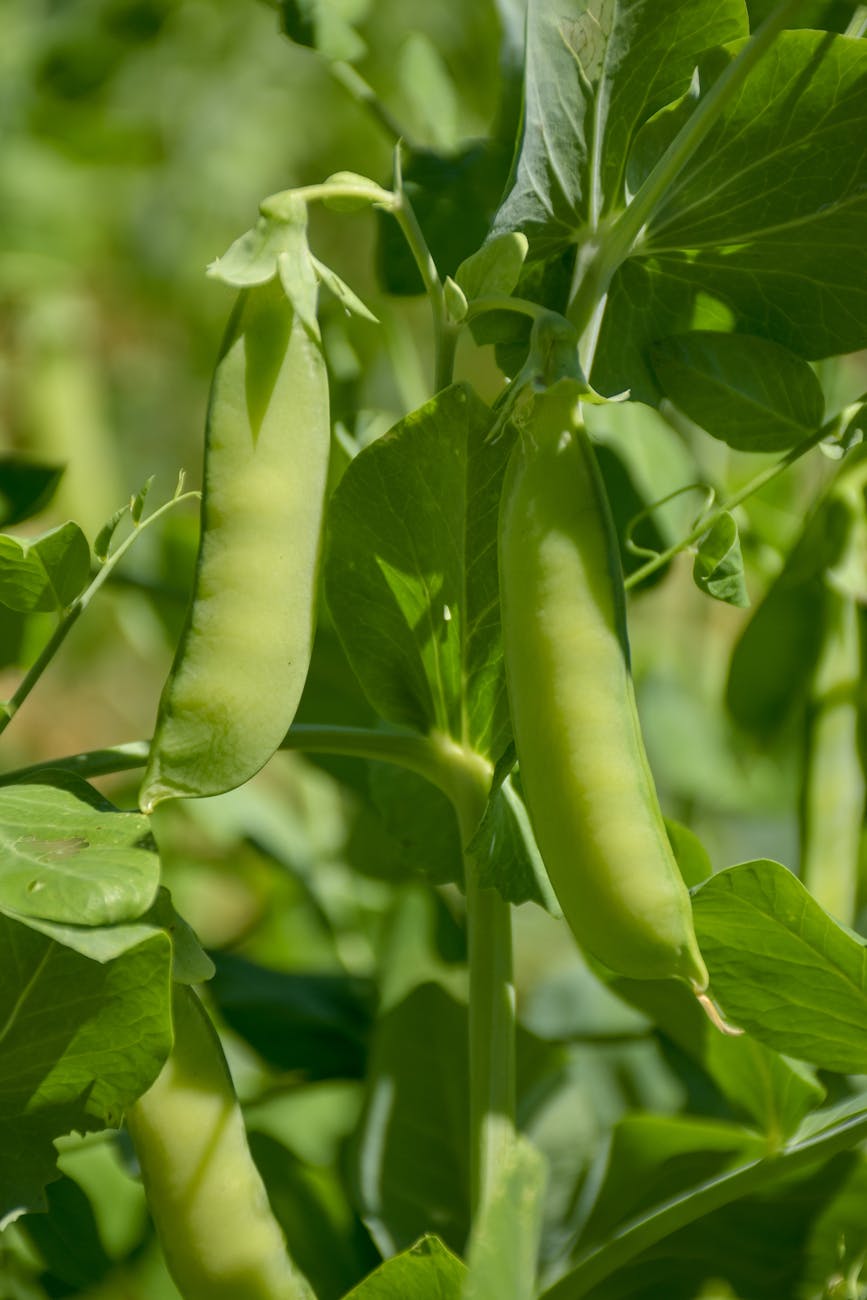
Mendel started his pea plant experiments over 160 years ago. Our understanding of genetic inheritance and molecular biology has evolved a lot since then. Shouldn’t our science curricula reflect that?
The idea for this post came from an article written by Robert Johnson, a fellow biology teacher, and critic of the biological sciences curriculum. As a middle and high school science teacher, I often reflect on the value, or real world application of the things that I am teaching my students. Where I teach has a curriculum set by provincial government, and the last major overhaul of middle/high science curriculum took place in 2006. As someone who studied genetics at the post secondary level, and now teaches it in the K-12 school system, I have struggled with the picture our curriculum paints for students about what genetics as a field is, and how simplistic it comes across as.
A huge part of most genetics curricula in secondary school biology courses revolves around the teaching of Mendelian genetics. Most people who have taken a biology course will remember Gregor Mendel and his pea plants demonstrating simple, single gene inheritance. Most will also remember the use of Punnett Squares to determine inheritance patterns. Robert Johnston points out that in addition to being overly simplistic, teaching Mendelian genetics and Punnett Squares does little to teach biology, and has instead an emphasis on mathematical reasoning. You do not need to understand mechanisms of inheritance or any sort of cell biology, you just need to be able to understand proportions. A dihybrid cross will always have the same result in a punnet square, no matter the trait being examined. Same with any combination used. While this is an important skill, it is not necessarily the desired outcome when studying inheritance patterns. It didn’t take me very long, as a student of genetics, to understand that this was an overly simplistic view of how inheritance works. Now, as an educator, I hope that we can teach Mendellian genetics, within a larger context of more modern, relevant and meaningful discussions.
The COVID-19 pandemic revealed a fundamental lack of scientific and health literacy amongst the general population. There were many critiques of how science is communicated, including calls for scientists to improve communication, and others indicating that biological sciences instruction was a matter of life and death. While these articles focus primarily on scientists and professional science communicators, I consider K-12 teachers to be the first science communicators that students encounter in their communities. It is important for them to be aware of what a modern view on scientific literacy looks like to adequately prepare their students.
There were several ideas that became controversial during the pandemic that had genetic underpinnings. These included the mechanism of action of mRNA vaccines, technology explained by the Central Dogma of Molecular Biology, and the efficacy of COVID testing through polymerase chain reactions (PCR), one of the most common techniques used in modern research laboratories. Misunderstandings in these areas resulted in significant numbers of people ignoring public health advice early in the pandemic and avoiding vaccination later in the pandemic, prolonging the pandemic and the implementation of associated public health guidelines.
Would a focus on concepts beyond this simple mathematical reasoning in a science curriculum be more beneficial? Should we phase out this classic story of early genetic science?
The Nature of Science (NOS) is an educational goal that has been championed by science educational systems everywhere in K-12 and Higher Education. David Allchin, a science education researcher has referred to NOS as Whole Science, or as the history, contemporary and inquiry of science. In other words, we should be teaching all of science, from Mendel, to present day mRNA vaccines and PCR testing for COVID. There are significant amounts of story that happen between Mendel and the present day, and teaching all of it would be near impossible, BUT there is a way we can compromise.
The narrative of Mendel’s pioneering work with pea plants in the mid-19th century is a cornerstone in biology education, laying the foundation for modern understanding of genetic inheritance. Emphasizing his meticulous experiments and principles like the laws of segregation and independent assortment is crucial for teaching biology effectively.
We are doing a huge disservice to teaching and society by leaving students with just the pea plant experiments of Gregor Mendel. Although this laid the foundation for our understanding of inheritance and genetic traits, we need to bridge the past and the scientific present. The advent of molecular biology, the discovery of the structure of DNA, and the completion of the Human Genome Project have revolutionized our understanding of genetics but are largely ignored in K-12 genetics education. Today, concepts such as gene expression, epigenetics, CRISPR gene editing, and genomics play crucial roles in medical research, biotechnology, and our understanding of evolution and biodiversity.
To provide students with a comprehensive and current education in genetics, school curricula must evolve to include recent advancements and their societal and ethical relevance. Integrating modern genetic concepts, such as CRISPR and personalized medicine, can inspire deeper scientific interest,critical thinking, and an improved appreciation for the impact of genetics on society today.
Understanding contemporary genetics is crucial for navigating public health challenges like pandemics and comprehending technologies such as mRNA vaccines and PCR.
A curriculum that blends historical context with modern advancements equips students with essential knowledge and skills, preparing them to address complex biological processes and societal challenges in an increasingly scientific and technological world. Teachers are the first scientific communicators for children and students, and have an impact across the world. It’s time we gave them the tools to do this through curricular and educational evolution.
Edited by JP Flores & Jayati Sharma



 GeneBites
Leave a comment