In vertebrates, parthenogenesis — a form of asexual reproduction involving genetic contribution from just the female parent — is rare. Parthenogenesis when both partners are kept in close proximity and have reproduced previously is even rarer, and yet, a miracle parthenote is made! Here, we look at such a never-before-seen case of parthenogenesis in California condors.
(Picture Credit: Dick Scholten on Pexels)
Ah. The miracle of life. The birds and the bees. What happens when mommy and daddy love each other very much.
But, what if daddy wasn’t required at all?
A new study sheds light on two separate cases of immaculate avian conception in California condors, the first such observation in this species!
Lots of species of invertebrates are known to engage in asexual reproduction without a male partner, like bees, aphids, and a particular all-female species of grasshopper. This particular kind of asexual reproduction — also known as parthenogenesis — has been observed in some rare cases in birds like turkeys, quails, and pigeons. A recent Heredity paper expanded this list when two cases of parthenogenesis were observed in the famous California condor.
What sets parthenogenesis in these eagles apart from their avian friends is the fact that the female California condors were kept in captivity with their previous male reproductive partners the entire time! In all other avian examples, the absence of males was noted to precede parthenogenesis.
But how did researchers even figure this out about California condors?
California condors are a critically endangered species. Since conservation efforts via captive breeding programs first began in 1987, with a total world population of 27 birds, the population size of these vultures has been on the mend, with a total of 561 birds as of 2022, out of which 214 are in captivity and 347 are wild, free-flying birds in California (U.S.), Arizona, Utah, Baja California (Mexico), and very recently, the Pacific Northwest. California condors also benefit from being part of a comprehensive, decades-long database including genetic and other data. When researchers suspected that the two male chicks in this study were not sired by their presumed fathers, they were able to verify this theory with the genetic data from these fathers. They repeated this test with all possible candidates, before concluding that there was, indeed, no genetic contribution from any male condors. To further confirm that these were examples of parthenogenesis, the chicks’ genetic information was compared against the genetic information of a supposed parent identical to the known mothers, and lo and behold! A parental match was found, thus conclusively identifying the offsprings as parthenotes, or organisms produced from just a female egg. These mark the very first instances of parthenogenesis observed in California condors.
Although both parthenotes are now deceased, this discovery has interesting implications for conservation research!
Scientists suggest that parthenogenesis could be a recurrent phenomenon. If true, this could be especially good news for areas with low-density populations of these birds. These birds exhibit significantly low genetic diversity due to a previous population bottleneck. Inbreeding in this species has led to the occurrence of a recessive allelic gene responsible for a lethal form of dwarfism called chondrodystrophy. Since California condors tend to lay only one egg at a time, the consequences of this are nothing short of devastating to population numbers. This is where the promise of asexual reproduction in these majestic birds comes into play. If unaffected parthenotes were produced and could mate and have offspring of their own, it would reduce the number of carriers of this deadly gene and corresponding lethal impacts.
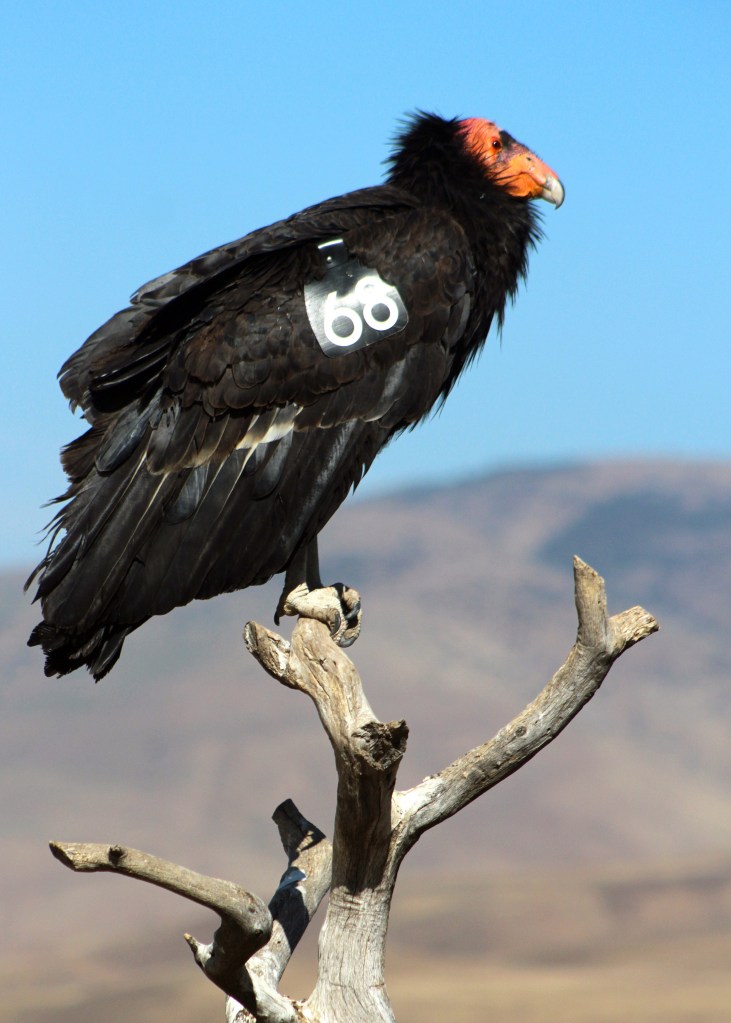
(Picture Credit: Pacific Southwest Region USFWS from Sacramento, US, via Wikimedia Commons. Photo by Stephanie Herrera, USFWS Intern).
However, these advantages are largely theoretical today. While the current California condor population shows some degree of inbreeding, the offsprings produced as a result of parthenogenesis could be clones of their mother if all of their loci are identical by descent from their dam, resulting in the highest level of inbreeding possible. This has sparked concerns that parthenogenesis, while eliminating the lethal allele, could concurrently lead to a rise in inbreeding, essentially bringing us back to square one.
We also don’t know if the parthenotes of this species can reproduce. Both parthenotes mentioned in this study died before reproducing, due to different causes.
We therefore don’t have sufficient data to determine the health, fitness, and reproductive potential of these parthenotes, let alone accurately quantify their advantages, or disadvantages, in larger populations. Observing more instances of parthenogenesis in this species could identify offspring viability and genetic consequences. Future studies could also tackle the lingering question of why California condors evolved the process of parthenogenesis in the first place.
So maybe immaculate conception isn’t a part of the birds and the bees conversation yet, but daddies beware! If some day soon your little bundle of joy asks why they resemble their mom more than you, there could be more than one explanation.
Edited by Jayati Sharma & JP Flores

 GeneBites
Leave a comment