Synthetic DNA has come a long way. We are learning more about it, and finding that it works a lot like natural DNA. The potential for creating new proteins for medical and other applications is very exciting.
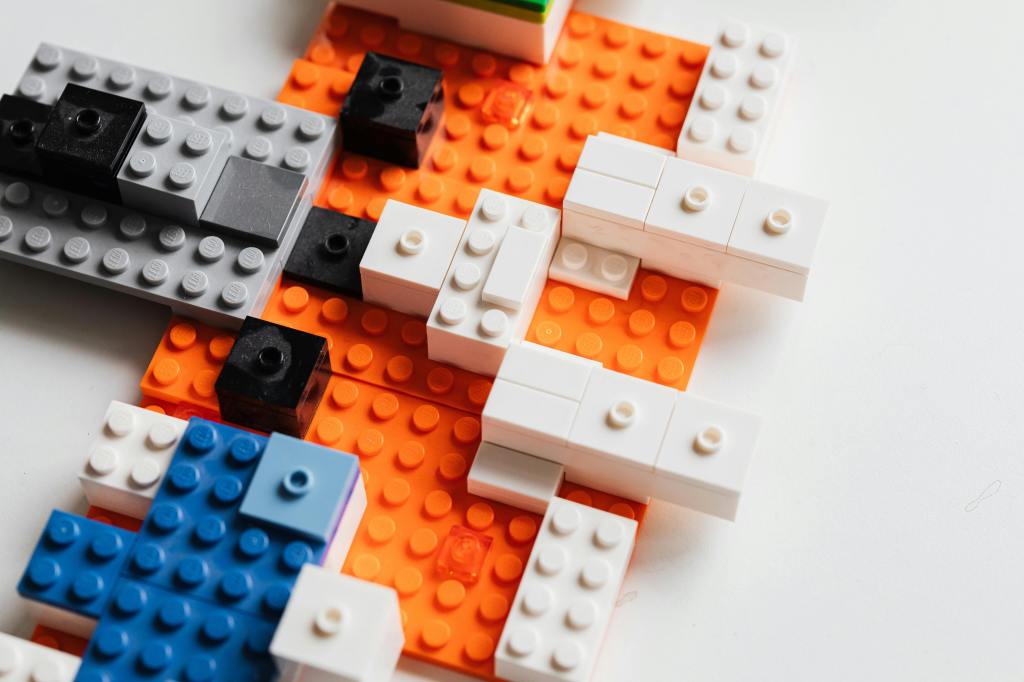
Surely I’m not the only one who had frustration as a child when I would try and link my true Lego pieces with some off-brand bricks? The colours didn’t really match up, they wouldn’t stick together quite as well, and the experience was just not quite authentic. Nothing beats classic Lego. Until recently, the world of synthetic biology was much the same; nothing quite beat the natural DNA alphabet of A,T,C,G, despite a few attempts to expand this ancient alphabet. In recent years, however, scientists have developed “off-brand” or unnatural DNA nucleotide base pairs (UBP’s) that they propose work with DNA. These are called Alternative Genetic Information Systems (AEGIS) DNA. There are currently four synthetic nucleotides (P and Z, B and S) that have been added to the natural DNA alphabet of A,T,C,G. The goal of AEGIS DNA is to expand the genetic alphabet, leading to more diversity in genetic information.
In a groundbreaking study published in Nature Communications, a team of researchers led by Dong Wang delved into the intricate world of transcription involving Alternative Genetic Information Systems (AEGIS) DNA by E. coli RNA polymerase. DNA transcription is a classic cellular process where the information in a gene’s DNA sequence is converted into a messenger RNA (mRNA) molecule inside the cell’s nucleus. An enzyme called RNA polymerase starts the process by attaching to the DNA and separating its two strands. It reads one strand of the DNA and builds a strand of mRNA by adding RNA building blocks that are complementary (A and T, C and G are the pairings) to the DNA’s code. As the RNA polymerase moves along the DNA, it strings together these RNA blocks to form a chain, which becomes the mRNA strand. When the mRNA is fully made, it is processed and then travels out of the nucleus. This mRNA will later be used as a guide to make proteins or perform other functions elsewhere in the cell. The study focused on how E. coli RNA polymerase recognizes and processes unnatural nucleotide pairs in the expanded genetic system (AEGIS), shedding light on the underlying mechanisms that guide transcription accuracy and efficiency.
Up until this point, the way that DNA transcription occurs with AEGIS DNA was not well understood. Scientists knew that some RNA polymerases (Taq polymerase and T7 RNA polymerase) were able to read and transcribe this synthetic DNA, but how they did it remained a mystery. After all, much like classic vs. off-brand Lego, a good off-brand or unnatural Lego should bind in the same way the classic Lego does, to avoid any problems. The researchers sought an answer to the question of AEGIS DNA binding, and determined the effective recognition and transcription of unnatural nucleotide bases in an AEGIS DNA system using E. coli RNA polymerase. This study used high-resolution cryo-electron microscopy, a technique that cools biological specimens to extremely cold temperatures and allows for the examination of almost atomic level structures. This imaging shows RNA polymerase and its elongated transcribed RNA strand, revealing shared principles behind the polymerase’s recognition of AEGIS and natural base pairs. The unnatural base pairs are now understood to adopt a Watson-Crick geometry within the active site of the polymerase, similar to natural base pairs. In other words, the unnatural base pairs interact with RNA polymerase in the same way that natural ones do.
The authors were also interested in why some DNA gets mismatched during transcription. Mismatches in DNA replication and in transcription can result in mutations. A mismatch is when the typical pairings of A,T and G,C do not occur. These typically happen because of the relocation of a hydrogen on the nucleotide base (called tautomerization), causing different opportunities for hydrogen bonds between nucleotides to occur. By visualizing and determining the way that these UBP’s are incorporated into an RNA strand, the research not only validates the design of AEGIS base pairs as being compatible with natural base pairs, but also offers insights into reducing misincorporation errors in DNA transcription.
It appears as though we have a candidate for some off-brand genetic Lego that works as well as the natural stuff. Currently, AEGIS DNA is used for synthesizing long strands of DNA that create antibiotic resistance and the formation of more effective versions of enzymes such as DNA polymerase. AEGIS DNA can even improve the quality of millions of common lab experiments that scientists run daily, specifically by preventing mismatching in polymerase chain reactions, or PCRs. Now that we know how these synthetic nucleotides undergo transcription, we also now know that they operate close to how the original A, T, G, and C alphabet does, allowing the expansion of the genetic alphabet. This makes genetic applications more versatile, paving the way for innovative solutions in diverse fields such as medicine and biotechnology.
The world is an extremely diverse place already, with only 4 natural nucleotides. With additional letters in the genetic alphabet, scientists have the ability to create a wider variety of proteins, with more precise and custom functions. This would allow for scientists to tailor-make the DNA/RNA/Protein to the specific function they are looking to perform. I hope off-brand Lego manufacturers are paying attention. I can’t wait for the Star Wars AEGIS Lego sets to hit the shelves.
Edited by Amanda N. Weiss & Jayati Sharma

 GeneBites
Leave a comment